Kamis, 25 Juli 2013

Croatia and Australia: A Unique Footballing Rivalry

Hugging the Mediterranean coast, Croatia, the country that brought you the cool manager, King’s Landing and the Dalmatian, has a rich football history given its relatively short lifespan as an independent country. Just before independence was gained from Yugoslavia, Croatia formed its national team in 1991 and gained FIFA membership in 1993, slotting in at a pitiful 125th in the world. Five years later however, Croatia was sitting pretty as the third best team in the world and have enjoyed great success over the last 14 years. 

10,000 miles away, on Australia’s south western tip lies the state of Victoria. Australia, a country dealing in arrogance, sporting achievement and always a good laugh, has for some time been known as one of the big football powerhouses in the East. Despite the stereotypical view of a lack of footballing prowess in Oceania and Asia, Australia have been able to hold their heads high. Including Brazil 2014, it will be the Socceroos' 3
rd consecutive world cup. With the constant development of football in Asia, the Aussies can only get better, and with that, their heads larger!

Victoria and Croatia, two incredibly different areas of the world, separated by a profound distance geographically but historically, the two share a very special bond that goes back over 160 years. The discovery of gold in Australia’s garden state in 1850 was kept a secret until a year later when the revelation of that the ground was golden was eventually disclosed. During the ensuing decade, the population of Australia tripled. This population boom was due to a huge surge in immigration and one nationality in particular stood out.

Australian Gold Rush

As the gold rushed out, the Croats rushed in. First as part of the Habsburg Monarchy of Austria-Hungary then much later, as part of Yugoslavia, Croatian nationals originally weren’t recorded as their separate demonym but rather as members of those said nations. In the present day, a Croatian population exists in every state of Australia; however, the majority remain in Victoria with the second largest group residing in neighbouring New South Wales.  Since Croatia gained independence from Yugoslavia in the 1990s, embassies and consulates have been set up in major cities around Australia, from Perth in the west, to Sydney in the east.

Melbourne Knights Logo
Melbourne Knights (Croatia)
 A strong passion for football lies at the core of many Croatian Australians. Many football clubs were established across the country with Melbourne Croatia and Sydney Croatia being two of the most successful. These clubs provided a hotbed for many talented football players, many of who play professionally in Australia, Asia and Europe. Internationally, Croatian Australians have represented both nations and at the 2006 World Cup in Germany, a staggering ten representatives were present. Seven donned the green and gold of Australia whilst the remaining three sported the famous chequered red and white of Croatia. 

During the 2006 World Cup, Croatia the Socceroos were drawn together in Group F alongside stalwarts Brazil and the resolute but underwhelming, Japan. In a moment of history, the two countries lined up against each other in Stuttgart and it fell to an Englishman to oversee proceedings. However, little did Graham Poll know that years of history were about to stand up and bite him on the arse.

3 yellows make err.....red?
Josip Šimunić, an Australian born, Croatian centre back picked up a booking in the 61st minute of the game for a soft foul on the mercurial Harry Kewell, on the edge of his area. Name and number (3), in the pad, Poll continued the game but just under half an hour later, Šimunić was in trouble again, receiving a second yellow. Incredulity spread like wildfire, from the commentary box to players. Where was the red card? Play continued and at the conclusion of the game, three minutes later, Šimunić picked up his third yellow card after remonstrating with Poll and finally the red was awarded.  Inevitably, this was Poll’s final game at the 2006 World Cup and any World Cup since.

With the football world not knowing whether to laugh or stare open mouthed at the television, what justification could poor old Graham give to aid his mistake? Well, there is not one really. Despite this, Poll has stated that upon the second booking, Šimunić was erroneously recorded as an Australian number 3 due to his Australian accent. Poor Graham, if only he’d been somehow able to read this before the game.
Kewell's decisive equalizer
The scale of the Croatian Australian population’s participation in the recent development of the Socceroos cannot be ignored. Now I could challenge you to name five and you might think; “hold on, Dan. Nobody knows this sort of stuff”. You would be wrong of course and as quick as it takes you to turn over from women’s football after England's swift exit, I present you:

The Manchester United mistake, Mark Bosnich. Tony Popovic who’s had spells at Crystal Palace, in Qatar, Japan and Australia. Mark “Big Dukes” Viduka of Celtic, Leeds, Middlesbrough and Newcastle fame. Josip Skoko who spend 3 years in the Premier Legue with Wigan and Stoke. Finally, Jason Čulina who prostituted himself (not literally) around Holland with stints at Ajax, De Graafschap, Twente and PSV.


So there you have it. Five “notable” players (I used Wikipedia for all but Bosnich and Big Dukes). 

Nonetheless, is there any other population of people of such diverse history sharing in such a defining and brilliant moment in football history? Maybe you can, but at least you have learnt something you probably did not know before and it's safe to say, Graham Poll definitely did not either!

Bosnich


Senin, 22 Juli 2013

Serie A: All Time XI


Over the years Serie A, affectionately known as “Calcio” by its fans and followers, has played host to some of the world’s greatest names, its most dominating teams and astute managers. Picking an XI that encompasses the entire history of a league from a country that has won the World Cup four times and the Champions League/European Cup 12 times is an astonishingly difficult feat, and there were some difficult omissions.
However, I’ve tried to be as all-encompassing as possible – the temptation to dip into the Serie A glory days of my own personal memories were great, but there were more worthy names from earlier generations that could not be ignored.

Anyway, without further ado – here is the line-up. Remember, this is completely subjective and just my opinion – so feel free to discuss and debate with me on Twitter @SamCalcio.

Pre-note: Despite its relatively modern arrival into the world of tactics, I went with the 4-2-3-1. I did this for two reasons: 1) I needed a back four, as a Serie A XI without at least four defensive players is wrong on several levels and 2) It allowed me to put five attacking players on it, including four vintage #10’s. It just made sense.


Goalkeeper:  Gianluigi Buffon
Parma: 1995-2001, Juventus: 2001 – Present
Italian football historians will claim fellow Juventus legend Dino Zoff is the deserved candidate for the #1 jersey for his longevity and clean sheet record, but the fact remains that Gianluigi Buffon is the most complete goalkeeper in Italian football history and arguably the greatest of all time.

Making his Parma debut at the age of just 17(an achievement in itself in the notoriously veteran-dependant Serie A), Buffon was named Serie A’s Goalkeeper of the Year before he turned 23 as a stalwart in Carlo Ancelotti’s exciting Parma side, featuring fellow future Juventus stars Fabio Cannavaro and Lillian Thuram.
A move to Juventus in 2001 for a still record fee(for a goalkeeper) of £32.1m was immediately justified as Buffon won consecutive league titles in his first two years. A World Cup win followed while  only conceding two goals(not including penalty shoot-outs) along the way, and only one from open play (which wasn’t even scored by the opposition, Christian Zaccardo’s own goal against the USA responsible for that). The other goal? A chipped penalty from Zinedine Zidane in the final.

Buffon affirmed his legendary status in the hearts of Juventus fans when he opted to stay with his ailed club during their spell in Serie B after the Calciopoli scandal, and fought back from a back injury in 2010 to win his 9th Serie A GKOTY award in 13 years in 2012.

Buffon’s agility, athleticism put him over the less mobile Zoff, and dons the #1 jersey in this XI.
Honourable Mentions: Dino Zoff, Walter Zenga.

Right-Back: Paolo Maldini
AC Milan: 1985 – 2009
I know what you’re thinking. Paolo Maldini, world’s greatest left-back, at right back? Well, yes. It seems a strange decision on the face of it until you find out that the Rossoneri stalwart was naturally right-footed, and played as a right winger up until breaking into the Milan first team at just 17. While it’s not ideal, because of the guy I’ve got at LB, this became a necessity.

Selected by then Milan manager Nils Liedholm after a second half injury to Sergio Battistini in 1985, young Paolo impressed the Swede with his composure and was given a starting berth the following season. Since then, Maldini was never taken out of Milan’s team, forming a key part of arguably football’s greatest ever modern club side when Arrigo Sacchi took over in 1987.

The victories came quickly and never really stopped, winning his first Scudetto of seven in 1988, and his first European Cup of five in 1989.

Blessed with composure, intelligence and technique that contradicted his position in defence, Maldini’s skill allowed him to have an almost inhumanly long career at the highest level, retiring from football in 2009 after nearly 24 years and 25 major trophies.

AC Milan retired the famous #3 until such time that Paolo’s children break into Milan’s first XI(note: they’re in the youth teams), and if they’re half as good as their father (or even their European Cup winning Grandfather Cesare) then Milan have much more to look forward to from the Maldini family.
Honourable Mentions: Mauro Tassotti, Cafu.

Centre-Back: Franco Baresi
AC Milan: 1977-1997

Another Rossoneri legend whose number has been kept back by his club, only this time there is no chance that anyone will wear the #6 again, and appropriately so. In a league dominated by great defenders, Franco Baresi was probably the easiest choice in this entire team.

Despite Franco’s less than imposing physical stature (his 5’9 frame leading to fans calling Baresi “Piscinin”, Milanese for “little one”) Baresi neutralised attacking threats by playing as the last man of the defence, solely responsible for the offside trap and utilising positional awareness and timing to catch out strikers.

Baresi won 10 league titles and three European Cups throughout a 20 year career as arguably the best player on a team that contained Marco Van Basten, Ruud Gullit and Paolo Maldini, famously captaining Italy to the World Cup final in 1994, playing 120 minutes in the sweltering Pasadena heat at the age of 34 with a knee injury he sustained earlier in the competition. Probably the most intelligent defender to have ever played.
Honourable Mentions: Fabio Cannavaro, Armando Picchi.


Centre-Back: Gaetano Scirea
Atalanta: 192-1974, Juventus: 1974-1988

The quiet leader of the Juventus defence that was more famous for partner Claudio Gentile’s notorious antics, Scirea was the key cog in a Bianconeri backline that set the example for the rest of Serie A during the entirety of his Juventus career.

The Italian answer to Franz Beckenbauer, Sciera was famous for taking the ball out of defence, forming an extra part to the midfield and even joining in up front – scoring 24 goals in the process for Juve during a 14 year spell with the Old Lady. Like his defensive accomplices, Scirea was a serial winner – seven league titles in 14 seasons and a World Cup for Italy in 1982 emphasises the totality of his success.

A quiet individual whose unique sportsmanship set him apart from his rivals for this spot in the line-up, his red-cardless career emphasise Scirea’s placidity and sportsmanship in an footballing era that was often famous for little of either.
Honourable Mentions: Claudio Gentile, Alessandro Nesta.

Left-Back: Giacinto Facchetti
Inter: 1960-1978

The first attacking full back of the game, a man whose revolutionary style of playing changed the way wide-defenders played the game and defined Inter’s greatest ever team. Facchetti began his career at Inter in 1960, instantly impressing charismatic tactician Helenio Herrera who placed the then striker as full back, inviting him to push forward despite his field position.

The plan worked to perfection, as Facchetti was one of the main reasons why Herrera’s catenaccio style was so effective. His stamina allowed him to patrol the by-line with pace and strength while his forward strides made for an effective counter-attacking weapon. The complete defender, Giacinto managed to also score 59 goals in Nerazzurri blue from his left back position, including 12 in the 1965-66 season.

Facchetti was the captain of Herrera’s Grande Inter side that won and retained the European Cup in the mid-60’s before losing to Jock Stein’s Celtic side in 1967.

Almost a shoe-in because of his impact on the evolution of the game, Facchetti also proved he was a superb player and leader too – captaining Italy 70 times out of 94 caps and winning the country’s only European Championship to date in 1968.
Honourable Mentions: Antonio Cabrini, Gianluca Zambrotta.


Central Midfield: Javier Zanetti
Inter: 1995 - Present
Javier Zanetti is probably the most astonishing example of human stamina in football’s entire history. Signed as a 21-year-old in 1995 from Argentinian side Banfield, “Pupi” has been a constant during a near 20 year stretch, his ability to play anywhere in defence or midfield as impressive as his consistency.

Zanetti played mostly as a right back for Inter until the Nerazzurri signed Maicon in 2006, where he became a defensive midfielder. The Argentinian doesn’t pass as well as Falcao, tackle as well as Edgar Davids or strike a ball as well as Marco Tardelli but the veteran’s ability to do all of those things well for nearly two decades at the heart of an Inter side wracked with change during the same period is the reason why his selection is justified.

At 39, Javier Zanetti is just as vital for Inter as he was when the Nerazzurri named him captain in 1999 – “Il Tractore(The Tractor)” the driving force of Inter season in, season out.

 A five-time Serie A Champion including the treble winning season of 2010, Javier Zanetti has won 16 major trophies in 18 years at Inter for 18 different coaches. He is set to break Paolo Maldini’s appearance record while under a contract that will see him at Inter until he is 40, and he will be the first name on the team sheet for whoever is in charge until he decides to hang his boots up – if that ever happens, of course.
Honourable Mentions: Falcao, Marco Tardelli, Edgar Davids, Nils Liedholm.

Central Midfield: Michel Platini
Juventus: 1982 – 1987

Compared to the earlier entries on this list, Michel Platini’s 5 year spell in Turin is dwarfed by his contemporaries in terms of longevity, but that the Frenchman nailed a spot on this list despite being in Italy for a relatively short period of time is emphatic of his magic.

Arguably the greatest player of a country blessed with Zinedine Zidane, and arguably the greatest #10 for a club blessed with Roberto Baggio and Alex Del Piero, Michel Platini was both ahead of his time and a throwback to a less frantic age of football - if only because of how simple he made the sport look.

To contextualise with a modern parallel, Platini had the passing range of Andrea Pirlo, the first touch of Zinedine Zidane, the awareness of Andres Iniesta and the charisma of James Dean. He was the silky touch on the pitch, and the quotable icon off it.

Platini joined Serie A and Juventus in 1982, replacing Irish hero Liam Brady (whose last kick won the Bianconeri the league the season before) but originally struggled to adapt to Italian football, nearly leaving just months after his arrival.

However, a more accommodating set of tactics freed the Frenchman who went on to lead Juventus to two league titles in 1984 and 1986 and a European Cup in 1985, Juventus’s first continental triumph. 
Despite his position in midfield, Platini led Serie A in scoring three seasons in a row and also won an unprecedented hat-trick of Balon D’or trophies, a feat only bettered by Lionel Messi in 2012.

Platini’s ability to drop deep to spread the play before pushing forward to join the attack made Michel the perfect midfielder in any formation, meaning he can adopt a roaming role as the orchestrator in my 4-2-3-1, thanks to Javier Zanetti next to him doing the defensive duties of two (or three) men.
Honourable Mentions: Andrea Pirlo, Lothar Matthaus, Giovanni Trappatoni, Frank Rijkaard.


Right-Winger: Valentino Mazzola
Venezia: 1939 – 1942, Torino: 1942-1949.

Mazzola may seem like a surprise inclusion for some who are unaware of the history of the Grande Torino side of the 1940’s, but a quick look through the history books reveal Mazzola’s inclusion is more than warranted. Played as an attacking midfielder in Torino’s 4-2-4 formation, Mazzola was the best player on a side that dominated Serie A more than any side before or since.

Torino own all-time records for consecutive Scudetti, unbeaten home records(four consecutive between 1945 and 1949), the biggest ever Serie A home win(10-0 vs Alessandria in 1947-48), the biggest ever away win (7-0 vs Roma in 1945-46) as well as single season records for goals scored, conceded, points amassed before the 3 point win was invented and a goal per game average of 3.125.

It’s an incredible run of success from a team that in a cruel irony was beaten by tragic circumstance rather than a sporting rival – the 1949 Superga aeroplane crash robbing Italian football of a legendary team that could have  - and probably would have – continued to dominate for years to come.

Mazzola scored 118 goals in just 204 matches for Torino before he died at just 30. His son Sandro went on to become more famous as one of Inter’s greatest ever players in the 60’s and 70’s, but no Serie A XI is complete without a player from Italy’s most endearing, successful and heartbreaking sides.
Honourable Mentions: Gianni Rivera, Jose Altafini.

Centre Attacking Midfield/Centre Forward: Diego Maradona
Napoli: 1984-1991

I had to fit him in here somewhere, didn’t I? Arguably the greatest player the world has ever seen left Barcelona in 1984 as a 24-year-old and entered himself into the hearts of Neopolitans everywhere, lifting them to their only Scudetti in 1987 and 1990.

Maradona became more than a footballer in Naples, embodying the Southern Italian attitude as his own, beating the Northern giants of Milan and Turin on the only medium they could compete – the football pitch. Diego became a social phenomenon, and a saviour. Even today, years after his exploits, murals of the Argentinian can be found in pristine condition throughout the Italian city.

Maradona’s effect and hero status during his time in Serie A was such that fans and management ignored Diego’s drug problems, partying and lateness. In fact, by 1990, Maradona barely trained, choosing instead to simply turn up to matches on his own minutes before kick-off.

During his peak, Maradona was simply untouchable. His talent was such that Napoli were instantly able to compete with Michel Platini’s Juventus (beating them to a title in 1987), and Arrigo Sacchi’s Milan(beating them to a title in 1990) during a time when Serie A was the undisputed king of world football. His departure began a trophy drought that was only been ended last season, Napoli winning the Coppa Italia after years in the Calcio abyss(that included a spell in Serie C), perhaps doing more than anything else to highlight how much of a difference ‘El Diego’ made to Napoli, and Serie A.

Rarely ever has there been a more influential player in a team sport.
Honourable Mentions: Zinedine Zidane, Kaka’, Ruud Gullit.


Left-Winger: Roberto Baggio.
Vincenza: 1982-1985, Fiorentina: 1985-1990, Juventus: 1990-1995, AC Milan: 1995-1997, Bologna: 1997-1998, Brescia: 2000-2004.

This was a difficult decision. I was very, very close to placing Francesco Totti in this spot, and I’m sure I’ve offended many by his exclusion from this XI. Trust me, I tried. Totti-supporters will point to his World Cup triumph, his longevity at Roma and his superior goal-tally to Baggio as for reasons why he should’ve been included instead, and they’re all fair reasons. However, the reasons I went Baggio over Totti was:

 1) Baggio achieved despite being hampered by coaching disagreements and injury for a large part of his career.
 2) Baggio won the Balon D’or in 1993, while Totti was never indisputably the world’s best player.
3) Despite Totti’s superior goals tally – Francesco has 227 goals in 535 games, while Baggio has 205 in 452, giving Il Divino Codino a goals per game advantage of 0.15 (Totti: 1 goal per 2.35 games while Baggio: 1 goal per 2.2 games). Give Baggio Totti’s games and club support, and I’m convinced he’d have scored more.
4) Baggio scored for poorer teams while Totti has been the centrepiece of all of Roma’s activity for 20 years.

Baggio, for me, is simply more impressive. There isn’t a player in Italian history more universally loved, respected and admired than Roberto Baggio, who spent a career battling injury and restrictive tactics to score 204 goals in Serie A, and 291 in all competitions.

Baggio’s career is probably best remembered by his missed penalty against Brazil in the 1994 final, robbing him of a World Cup his talent richly deserved. But, like that wayward strike in Pasadena in the unforgiving summer heat, Baggio’s career was not built on trophies. It was built on moments.

From his 1989 entrance into the Serie A spotlight with his stunning solo effort against Diego Maradona’s Napoli, no less, to his one touch-and-finish goal for Brescia against Juventus in 2004 at the twilight of his career, Baggio entertained Italian football fans the world over with flashes of skill and goals that lived in the memory forever.

Perhaps best remembered for his time at Juventus – winning the Balon D’or in 1993 and Serie A in 1995, it was for provincial sides that Baggio often displayed his best work, relishing the freedom given him by the likes of Brescia and Bologna rather than the tactical restrictions from Milan and Inter, two teams unwilling to shape their teams around the mercurial striker.

A successful year at Bologna saw Baggio re-join Italy for the 1998 World Cup after an Azzurri exile, and the veteran won a penalty in the opening game against Chile. It was the first he would take for Italy since the famous miss in 1994. Roberto bent over, staring at the ground for several seconds before picking up the ball, laying it on the spot and scoring. It was an exorcism for Baggio, and a reminder to his doubters.

Baggio was often dropped later in his international career in favour of younger, or more physical talent; Alex Del Piero, Gianfranco Zola and Christian Vieri all saw starts ahead of Baggio while Marcelo Lippi’s continued benching of the forward meant that he missed out on Euro 2000. Italy lost the final to France after Del Piero, favoured over Baggio, missed several gilt-edged chances to win the game.

Baggio continued to be adored by the Italian public, finishing his career with a four year spell at Brescia. His retirement saw an entirely universal response of praise from all corners of Italy, highlighting Baggio’s unique appeal and status among the notoriously territorial Italian football fan.
Honourable Mentions: Francesco Totti, Alessandro Del Piero, Sandro Mazzola.


Striker: Giuseppe Meazza
Inter: 1927-1940, Milan: 1940-1942, Juventus: 1942-1943, Varese: 1944, Atalanta: 1944-1946, Inter: 1946-1947.

The man whose name was lent to the stadium that both Inter and Milan play is a pretty good reason on its own, but Giuseppe Meazza also happens to be a two-time World Cup winning striker who was probably the most dominating in his position in Italian football history.

Silvio Piola may have scored more, boasting a formidable 274 Serie A goals to his name, but Meazza could do more than score. An incredible technician, blessed with supreme dribbling and passing ability, Meazza was the complete striker before multi-faceted footballers was a modern trend.

Meazza was the first player with personal sponsors, a real bona fide celebrity before the term was commonly coined for sportsmen and anecdotes about Meazza’s career reveal what was a charming, entertaining and very talented rebel.

Giuseppe scored bicycle kicks, Maradona style dribbles through the heart of a team and dominated scoring charts in an unforgiving footballing climate, Meazza often having to dodge fouls from players who were keen to avoid humiliation. He could drop deep, he could challenge for headers and famous Italian journalist Gianni Brera even saw Meazza as “the perfect midfielder” due to the completeness of his ability.

Joining Milan in 1940 after an injury saw him cry after scoring a goal against beloved Inter in the Milan derby, perhaps becoming the only player in Milanese history to avoid abuse for crossing the footballing divide by virtue of being who he was.

Meazza returned to Inter after a six year absence, ending his career in the Nerazzurri colours, finishing with 314 goals in 511 games in all competitions.

A case can be made for Marco Van Basten, Andriy Shevchenko, Gigi Riva, Gabriel Batistuta and several other forwards, but none did for as long, as well or as emphatically as Giuseppe Meazza.
Honourable Mentions:
Marco Van Basten, Andriy Shevchenko, Gabriel Batistuta, Ronaldo, Silvio Piola, Gigi Riva

Final XI (4-2-3-1):

Buffon; Maldini, Baresi, Scirea, Facchetti; Zanetti, Platini; V.Mazzola, Maradona, Baggio; Meazza.

Want to hear more from Sam? Check out his blogger - http://twitteratsamcalcio.blogspot.co.uk/

1958 World Cup: Wales' Finest Hour

Welsh 1958 XI
Rugby. The one sport which dominates Welsh life and sporting culture. The recent success of the Welsh team captained by Sam Warburton to the World Cup semi-finals and two consecutive Six Nations has promoted the Celtic nation to a global scale. However, despite this, perhaps Wales' greatest sporting success story lies within the 1958 World Cup in Sweden. In a tournament where all four home nations qualified, the Welsh story and run to the quarter-finals remains the most intriguing.


The 1958 World Cup provides the United Kingdom with quite an anomaly, as all four home nations (England, Wales, Scotland and Northern Ireland) qualified for the final draw in Sweden. Amongst the British contingent was holders West Germany, twice winners Uruguay and favourites, the 1950 runners-up, Brazil with seventeen year-old Edson Arantes do Nascimento, also known as Pelé at the forefront of their plans for global victory.

England had qualified for the World Cup twice before, in the 1950 and '54 tournaments, losing famously to the United States in the former before defeat at the hands of reigning champions Uruguay in 1954 a year after their 6-3 and 7-1 drubbings at the hands of Ferenc Puskas' Hungary. Scotland had also qualified in 1954 only to be comprehensively beaten 5-0 by again Uruguay in a group stage in which they failed to gain a point. Northern Ireland were also competing in their first World Cup finals following topping a group containing Italy and Portugal.

USA 1-0 England
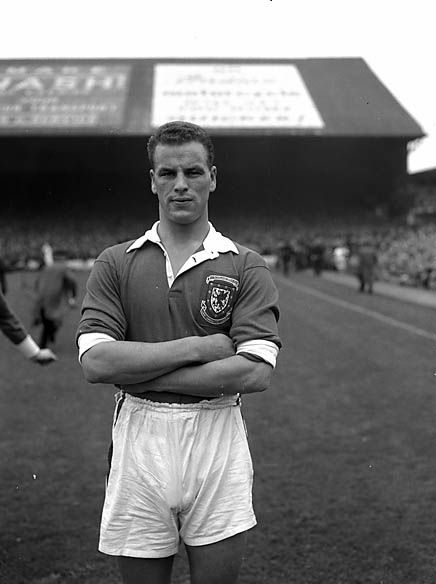
However, it is the Welsh story which offers us the most interesting accumulation of events in 1958 which is still to this date (2013) the only World Cup they have ever qualified for. The national side in the late 50s found success due to its frontline of Ivor Allchurch, PSV Eindhoven's Trevor Ford and Juventus star John Charles, the latter nicknamed "Il Gigante Buono" or "The Gentle Giant" due his large physique and the fact he never received a booking. Managed by Jimmy Murphy, the squad has since become known as the "Golden Generation" of Welsh football.

As far as qualifying was concerned the Welsh road to Sweden has to be one of the most unusual in living memory. Following a second place finish to Czechoslovakia in Group 4, a campaign which included a 4-1 thrashing of East Germany, the Welsh looked to have missed out on qualifying. However, Middle-Eastern tensions meant Sudan, Indonesia and Egypt were reluctant to play Israel following the Suez Crisis - Israel were awarded the title of "Group Winners" by default. From the European nations lots were drawn to determine who would play Israel in a play-off. Belgium were drawn initially only to refuse participation, in doing so leaving FIFA with Wales as the next eligible nation. The Welsh won the two-legged tie 4-0 and qualified for their maiden World Cup. - (How the teams qualified)

John Charles
The group stages saw Wales drawn in a tricky collection of teams including 1954 runners-up Hungary, albeit without Puskas, Kocsis or Czibor due to the fallout of the 1956 Hungarian Uprising. Hosts and eventual finalists Sweden and CONCACAF qualifiers Mexico completed the four-team table. Jimmy Murphy's side would record respectable draws against all three nations, although almost defeating the Mexicans but for an 89th minute Jaime Belmonte goal cancelling out Allchurch's opener. Wales three-point led to a tie for second place with Hungary meaning another play-off would have be played to determine who would reach the quarter finals.

The other British nations had mixed fortunes in Scandinavia. Northern Ireland progressed to the last 8 after a play-of victory over Czechoslovakia, whilst England and Scotland both exited at the group stage. England drawn alongside Brazil, USSR and Austria lost out via the play-offs to the Soviet Union, but managed to play out the first ever goalless draw in World Cup finals history, 0-0 with a Vava inspired Brazil. Scotland only managed a point from a group containing a French side offering the likes of Madrid's Raymond Kopa and Stade Reims' Moroccan-born Just Fontaine who went on to score 13 goals at the finals, a record to this day.

Just Fontaine
However, the Welsh play-off victory against Hungary would go down as the greatest in Welsh football history to that date, only being perhaps trumped by the 2-1 victory over Italy in 2002. The Eastern European side were as aforementioned, a side missing the flair of Puskas and Kocsis, but still boasted the "Magical Magyars Nandor Hidegkuti, Joszef Boszik and goalkeeper Gyula Grosics. Despite Lajos Tichy 33rd-minute opener, Wales hit back through first Allchurch, before Terry Medwin scored the pivotal goal which turned out to be the winner 17 minutes from time to provide the 1958 World Cup with one of its greatest ever shocks.


Brazil would meet the Welsh in the quarter-finals in front of 25,000 at the Ullevi stadium in Gothenburg. Brazil had entered the World Cup seeking to collect the Jules Rimet trophy for the first time, having gone so close in 1950 before losing to Uruguay at the Maracana. The previous World Cup saw them lose to the Might Magyars 4-2 in a violent affair dubbed at the time, "The Battle of Bern." At the front of the South-American's attack was the 17-year-old Pelé who was yet to score at the tournament. Vava had been stealing the limelight scoring 2 goals against the USSR in the group stages.

Wales entered the game as huge underdogs, with Brazil expected to roll over the side depleted of their star man John Charles through injury. It was Pelé who would score the only goal of the game, his first internationally, becoming the youngest ever World Cup scorer in the process. The goal came in the 66th minute, around the same time Northern Ireland were found 4-0 down to Fontaine's France. After the game Jimmy Murphy was recalled as saying "with John Charles in the side we might have won".

Pelé takes on the Welsh
Since the 1958 quarter-final much has been said of the time "Pelé broke our hearts" before his Brazil side emerged as the overall victors, beating Sweden 5-2 in the final. The Encyclopedia of World Football has described the Welsh World Cup performance as "heroic" and "unlucky" due to the loss of Il Gigante Buono, John Charles. Unfortunately Wales have yet to repeat the 1958 heroics and earn a spot at a major tournament, last coming close in 2003 for the following year's European Championships, when Vadim Evseev broke Welsh hearts again in a controversial two legged tie with Russia.

Despite near misses in 2003 as well as twenty-six years previous when Joe Jordan's "handiwork" resulted in a 1-0 victory for Scotland at Anfield before the 1978 World Cup, the future for Welsh football looks bright. Cardiff City have recently joined Capital One Cup winners Swansea in England's top flight whereas Newport County have reached the Football League for the first time 25 years. The national team has also began to show signs of re-emergence following the arrival of Chris Coleman after Gary Speed's tragic passing. The back-to-back victories over Scotland have breathed new fire into the Welsh team and with an array of talent including PFA Player of the Year Gareth Bale, Arsenal's Aaron Ramsey and Liverpool's Joe Allen it is surely only a matter of time before the heroics of 1958 are repeated!
The Future's Bright!


Sabtu, 20 Juli 2013

Transfer Pemain Liga Italia 2013

Transfer Pemain Liga Italia 2013 | post ini akan memberikan informasi mengenai transfer pemain di liga italia, baik pendatang baru ataupun yang akan pergi dari liga italia. Seperti halnya edison cavani yang harus meninggalkan napoli dan hijrah ke PSG.

Transfer Pemain Liga Italia 2013

Transfer Pemain Liga Italia 2013

Transfer Pemain Liga Italia 2013

Demikian mengenai Transfer Pemain Liga Italia 2013, semoga bermanfaat.


Hasil Manchester United Vs A-League All Star


Hasil Manchester United Vs A-League All Star
Hasil Manchester United Vs A-League All Star | Setelah minggu lalu dipaksa tunduk oleh Thailand All Stars, Manchester United langsung bangkit dengan menggebuk A-League All Stars 5-1 di Stadion ANZ, Sydney, Sabtu (20/7).


Sepasang penggawa muda Jesse Lindgard serta Danny Welbeck sama-sama mengemas dua gol untuk memberikan kemenangan perdana buat manajer baru David Moyes. Robin van Persie yang masuk dari bangku cadangan turut menyumbang satu gol untuk menuntaskan hasil impresif The Red Devils. Sementara satu gol balasan A-League All Stars dibuat Besart Berisha.


United tampil menggebrak sejak peluit kick-off dan langsung mendapatkan tiga kans bagus yang semuanya hasil kreasi bintang veteran Ryan Giggs. Sayang, tiga sundulan Lindgaard, Phil Jones, dan Patrice Evra dari umpan silang Giggsy semuanya terlalu lemah sehingga mudah diantisipasi kiper Ante Covic.


Meski begitu, skor kacamata tetap tak bertahan lama. Menginjak menit ke-11, Lindgard, produk akademi Setan Merah berumur 20 tahun, membuka keunggulan skuat Moyes setelah melepaskan diri dari perangkap off-side untuk menerima bola terobosan Tom Cleverley dan menaklukkan Covic.


United sempat terancam oleh tembakan Thomas Broich yang melayang di atas mistar sebelum menggandakan skor pada menit ke-34 lewat kaki Welbeck. Striker 22 tahun itu menampilkan pertukaran umpan segitiga nan apik dengan Lindgard dan Giggs sebelum menyontek bola ke dalam gawang A-League All Stars.


Ketinggalan 2-0, A-League All-Stars mengawali paruh kedua dengan sempurna dan menipiskan kedudukan melalui tembakan Berisha, yang sebelumnya mengungguli Jones dalam duel perebutan bola (52').


Namun, hanya dua menit setelahnya Iblis Merah berhasil mengembalikan surplus dua gol. Lindgard dengan lihai mengelabui Josh Risdon di tepi kotak penalti sebelum menghunjamkan tembakan kencang ke pojok gawang Michael Theo, kiper pengganti di kubu All Stars.


Di 20 menit terakhir, giliran Welbeck melesakkan gol keduanya usai menanduk masuk sebuah tendangan penjuru yang diambil Robin van Persie.


Nama terakhir yang masuk menggantikan Giggs di menit ke-61 itu lantas melengkapi kemenangan United dengan menyambar bola rebound hasil tembakannya sendiri yang sebelumnya ditangkis Theo. Hasil Manchester United Vs A-League All Star

The Spanish National Team: A Brief History

A golden era has descended Spanish football. The Spanish national team, also known as La Roja, are currently enjoying the best moment in their footballing history. Having completed consecutive European Championship victories with the 2010 World Cup success in between, this team is now regarded as one of the best in the history of the sport. What is more, their recent success does not look like ending anytime soon with their triumph at this year’s under 21 European Championship.

Not only does Spain have a star studded starting 11, which includes the likes of Xavi, Iniesta, Casillas, Sergio Ramos and David Villa. The current squad has a phenomenal strength in depth and the nation boasts some of the most prestigious young talents such as Isco and Thiago Alcantara.

However, what about the years preceding this golden generation? Spain haven’t always had it all their own way. 

Beginnings:

Created in 1920, primarily to compete in that year’s Olympic games, Spain became the 28th nation to play a football match with their opening game of the tournament (a 1-0 win over Denmark) and in that match, Patricio Arabolaza became the first player to score an international goal for Spain. However, Spain ended the Olympics with a silver medal, losing to that years hosts and eventual winners, Belgium. Yet such early promise could not be built upon as the Civil War and World War II ensured that football took a back seat until the 1950 World Cup qualifiers. 

Spanish 'Keeper Ricardo Zamora

1950s:

Despite not winning a single match during the 1950 World Cup, they finished the tournament fourth. This remained their highest finishing position in a world cup until 2010. The 1950 World Cup finals were conducted in a group format where the four teams that advanced from the original group stages all played each other in a final group. Spain drew with eventual winners Uruguay (2-2) and lost to Sweden (3-1) and Brazil (6-1). Spain failed to qualify for either of the other world cups held during the 1950s. What is more, General Franco refused to allow the national side to travel to the Soviet Union to play the quarterfinal qualifying match. Therefore, the Soviet Union were awarded a walkover victory and Spain failed to qualify for the very first European Nation’s Cup in 1960.

1960s: 

The 60s were a better decade for Spanish football. They qualified for the 1962 World Cup in Chile, although they finished the tournament bottom of their group. However, Spain emerged victorious from the 1964 European Championships that they hosted, beating a strong Hungarian team 2-1 in the final thanks to Marcelino Martinez’s late winner. This was their first international title and would prove to be their only one for 44 years after. This earned them the title of underachievers and as the decades wore on the term proved more and more accurate. Spain failed to qualify from the group stages of the 1966 England World Cup (we all know who won that!). Spain were knocked out of the 1968 Euro quarterfinal by England. This would prove to be Spain’s most successful decade until the turn of the millennium. 

Euro '64 Champions

1970s:

The 1970s was a quiet decade for Spanish football. Spain failed to qualify for the 1972 European Championships in Belgium, as well as the 1974 World Cup hosted in West Germany and the 1978 European Championships in Yugoslavia. Although they did qualify for the Argentinian World Cup in 1978, Spain failed to progress from the group stages.

1980s:

Vs England at the 1982 World Cup
Although Spain qualified for the 1980 Italian Euros, they finished bottom of their group and was another unsuccessful tournament. Despite hosting the World Cup in 1982, Spain fared little better. They progressed through the first round of group stages but finished bottom of the second group. The 1984 European Championship proved far more successful for Spain as they reached the final but lost 2-0 to the hosts France. Spain qualified for the 1986 Mexican World Cup, famed for Maradona’s ‘hand of God‘ goal. They qualified through the group stage but lost to Belgium on penalties in the quarter final. Emilio Butragueño was a key figure for Spain and was second top scorer in the tournament, despite only getting to the quarter finals. This period of relative success was cut short as Spain failed to progress to the knockout stages of the 1988 European Championships in Germany. 


1990s: 

Despite finishing top of their group in the 1990 Italian World Cup Spain lost to Yugoslavia in the first knockout round of the tournament. They failed to qualify for the 1992 European Championships but did qualify for the 1994 US World Cup. With a team that included the likes of Josep Guardiola Spain reached the quarter finals of the tournament where they lost 2-1 to Italy. Spain also reached the quarter finals of the 1996 European Championships where they lost to the hosts England on penalties. The 1998 World Cup was a disappointment as Spain failed to make it out of the group stages. 

2000s

By the end of the 20th Century Spain was a regular team in the major tournaments. Yet it had still failed to lift a trophy since their success in the 1964 European Championships. However, Spain was now often seeded in the major tournaments, showing how they had progressed as a footballing nation. Despite a strong squad that included Raul, a young Iker Casillas and Josep Guardiola, Spain lost to eventual winners France in the quarter finals of the 2000 Euros. 

Guardiola v Zidane
Despite a strong run, where they won every game in the group stage, Spain lost in the quarter finals again of the 2002 World Cup in Japan. Spain boasted a very strong squad for the 2004 Euros, captained by Raul and with Puyol marshaling defense they had some of the best players in the world. Yet, they still failed to advance from the group stages and the title of underachievers continued to hang above the nation. Spain won their group in the 2006 World Cup but lost to France in the first knockout stage, another disappointing tournament. 

THAT goal from Torres

This would be the last time Spain would fail to win a major tournament to this day. Having won back to back European Championships in 2008 and 2012, with a World Cup triumph in between and a number 1 spot in the FIFA rankings, things have never been better. Also Vicente Del Bosque has arguably the greatest array of talent at his disposal, with a number of the best players in the world. It can be argued that Spain play the best football anywhere in the world with their tiki-taka style and with such a vast amount of talented youth to break through into the Spanish squad I wouldn’t bet against them in the future major tournaments. Despite their recent loss to Brazil in the Confederations Cup final, the future looks bright for La Roja.

The Papers say it all - 2008, 2010, 2012 champions


Entri Populer

Diberdayakan oleh Blogger.


© 2013 TOPSCORE AND NEWS. All rights resevered. Designed by Templateism

Back To Top